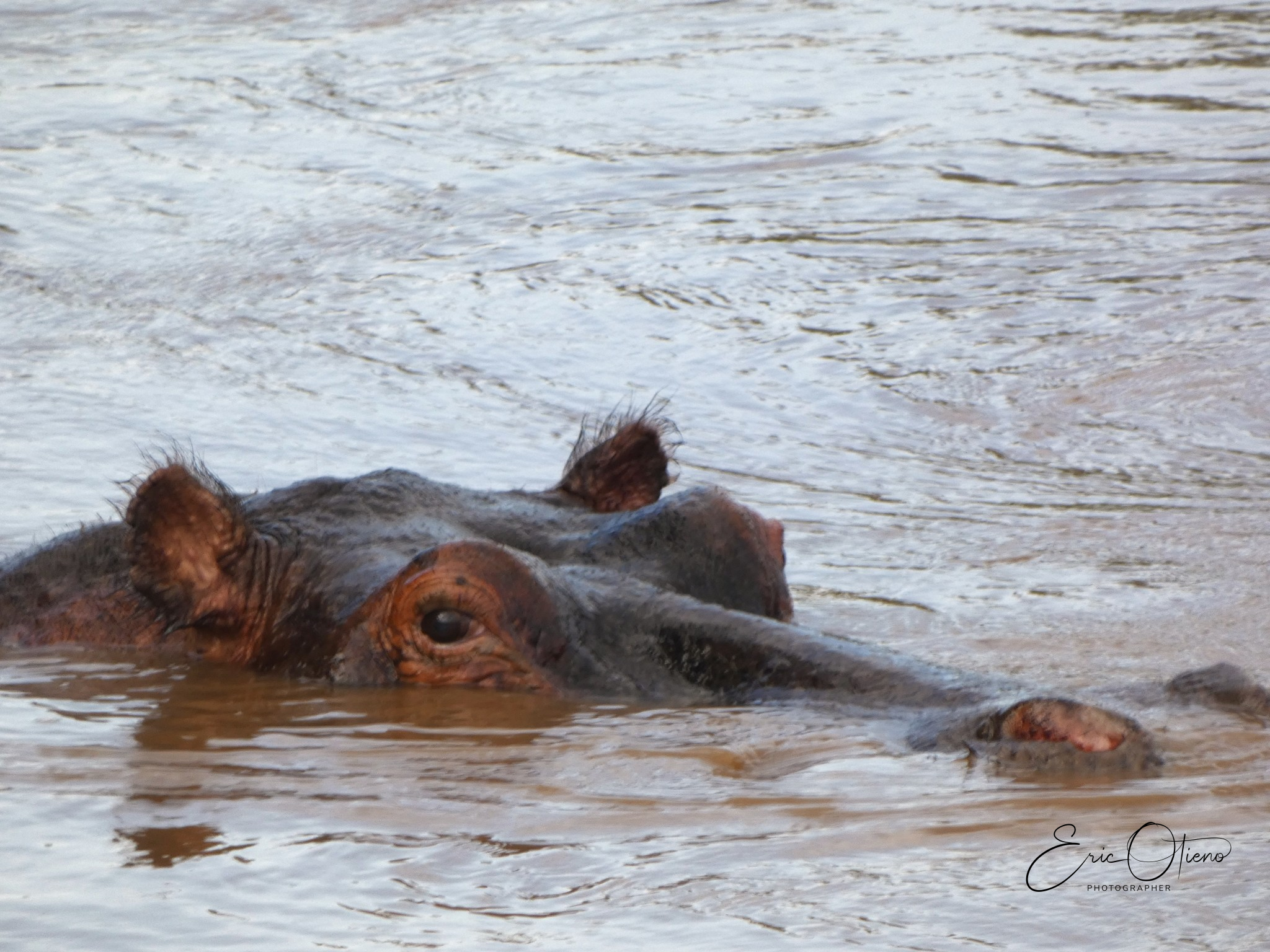
Hippos are usually found in rivers, lakes, channels and permanent pools.
Where are hippos usually seen?
Hippos are usually associated with rivers, lakes, channels and permanent pools. They spend much of the day in water and often leave to graze after dark.
Strong viewing areas include the Mara and Talek river systems, Lake Naivasha, the Kazinga Channel and several other East African waterways. A boat can provide excellent views where the activity is properly managed.
Never approach a hippo on foot or stand between a hippo and the water. Their calm appearance in a pool can hide how fast and dangerous they are on land.
Are nocturnal animals included in game drives?
Seeing nocturnal wildlife depends on whether night drives are permitted in the specific park, conservancy or concession. Many national parks restrict driving after set hours, while some private conservancies offer guided night drives.
Possible sightings vary but can include genets, civets, porcupines, bush babies, hares, owls and predators active after dark. Nothing is guaranteed, and spotlight use should be controlled so animals are not repeatedly harassed.
If night wildlife is important, the itinerary should include a destination where the activity is legal and responsibly operated.
How often are the Big Five seen?
The Big Five are lion, leopard, elephant, rhino and buffalo. Several East African itineraries can provide opportunities to see all five, but no park can guarantee the complete set on a particular visit.
The Maasai Mara is strong for lions, leopards, elephants and buffaloes, while rhino sightings can be less predictable than in dedicated conservation areas. Ol Pejeta and Lake Nakuru add excellent rhino opportunities. Combining destinations often gives a more rounded safari than chasing all five in one place.
ESA Safaris can design a route around your wildlife priorities, but the safari should still leave room for the hundreds of species and behaviours that fall outside the Big Five label.
Wildlife does not follow a timetable
Guides improve your chances through experience, tracking and knowledge of the landscape, but wild animals choose where to move. Weather, water, prey, breeding and disturbance all influence a sighting.
The best game drives allow enough time to observe behaviour. A quiet twenty minutes with one animal can reveal more than a hurried search for a longer species list.
What this means for your itinerary
Nocturnal wildlife can be seen only where night drives are legally offered. Big Five sightings vary by destination and are never guaranteed.
Before you book or travel
- Tell ESA Safaris which species or behaviours interest you most, while keeping expectations realistic.
- Ask how much time the itinerary allows in the wildlife area, not only how many destinations it names.
- Pack binoculars if you enjoy observing behaviour rather than relying only on the guide's equipment.
- Follow the driver-guide's decisions on distance, positioning and when to move on.
Frequently Asked Questions
Can I ask the guide to move closer?
You can explain what you hope to see or photograph, but the driver-guide decides the safe and permitted distance. Wildlife welfare and park rules come first.
Do binoculars make a difference?
Yes. Binoculars help with birds, distant animals and behaviour that is easy to miss with the naked eye, even when you also carry a camera.
Are wildlife sightings guaranteed?
No. A responsible safari operator cannot guarantee a wild animal. Guides improve the chances through local knowledge and fieldcraft, but weather, habitat and animal movement still matter.
Is an early game drive always better?
Early morning is often productive because temperatures are cooler, but good sightings can happen at any time. The best schedule depends on the destination and conditions.
Make the itinerary fit the traveller
If wildlife is the main reason for your trip, tell ESA Safaris which habitats and species interest you most. The team can shape the route around the right regions and enough time in the field, without pretending that wild animals can be scheduled.